Early 2020’s cinema is not the first place the pandemic-themed horror film has appeared, but something sets the films audiences have been seeing in the last few years apart. Rather than zombie hoards and infections, the fears that come to the forefront are primarily concerned with interpersonal relationships and the way the strain and frustration of quarantine gives way to less obvious yet equally infectious phenomena such as sadism in The Sadness (2021) and social media fueled echo chambers of hate and bigotry in Dashcam (2021). When it comes to our romantic relationships, codependency, intimacy, and identity are at the center of director Thibault Emin’s feature debut. In a perfect double feature with Michael Shanks’s body-horror-romance Together (2025), Else follows the humanity of a singular couple in the midst of a mysterious body-morphing epidemic.
Anx and Cassie’s relationship is a bit more nuanced than simply being a couple. The film opens with Anx’s inability to perform in bed as he lies on top of a girl the audience can best assume he met the night before. Cassie makes light of a situation that would likely turn a one night stand into forgotten phone numbers, and remains rather infatuated with the quirky, nervous Anx. As these two get to know each other, an epidemic of fusion begins to unfold in the world around them, and they find themselves quarantined in Anx’s apartment while just outside their walls people are fusing with the objects around them. A fun little experiment that both new and long-time lovers experienced during the quarantined periods of the COVID-19 pandemic turns into an anxious chamber piece as the world collapses around them.
These two could not be more different from one another, but the slight friction caused when Cass’s playful and carefree personality rubs against Anx’s tense and anxious nature seems to be an integral part of the attraction between them. As the epidemic progresses and theories begin to rise about how the condition spreads, the threat penetrates Anx’s apartment building. Each time they find themselves under attack, the care they have for one another develops. While the earlier moments of the film are awkward and claustrophobic, the intimate world of Anx and Cassie begins to feel expansive while the sets around them converge and close in. Through the transformations the main characters endure, Else explores the way loving someone else can fundamentally change a person, how discovery of the Other becomes necessary to define the Self.
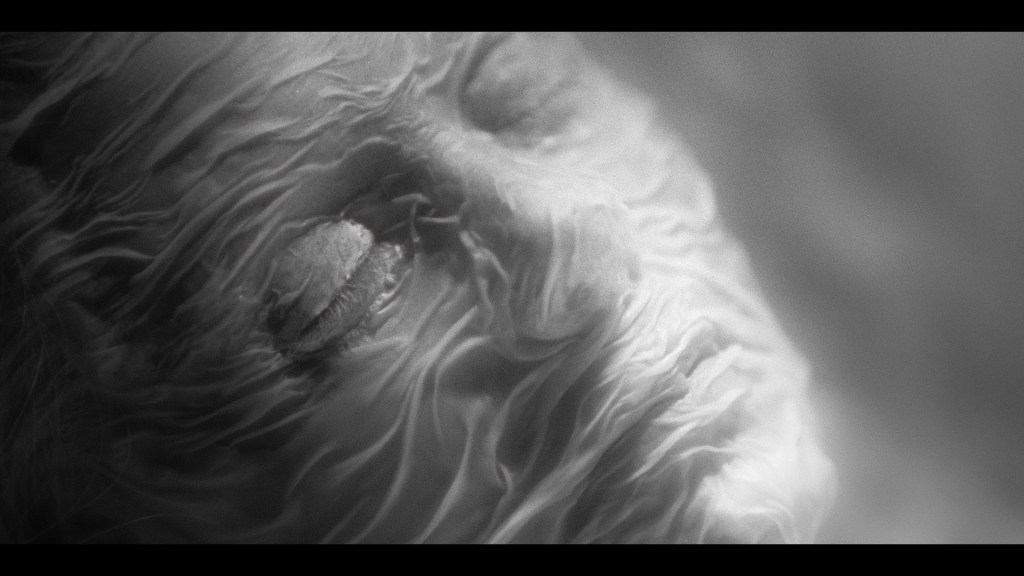
The power of body horror is the ability to weaponize and challenge the limits of the physical form as a method of expressing inner turmoil. When Else commits to simplicity, the body horror is effective and visually stunning. The use of color, or the lack thereof past the midway point of the film, is an understated way to carefully curate the vibe of the film. Cinematographer Leo Lefevre creates a bleak mind-melding daydream to house Emin’s poetic meditation on identity.
The more ambitious VFX of the film have triggered a debate over the use of AI. While Emin stated during the film’s post-Los Angeles premiere Q&A at Screamfest 2024 that no AI was used to create the film’s trippy visuals, viewers cannot help but question the computer generated graphics (as we all should hold artists accountable for protecting art against AI). Regardless, the frenzy that Else conjures is inevitable considering the film’s subject matter. The constantly changing surroundings created by these visual effects are meant to cause uneasiness, one that certainly mimics our response to AI generated imagery. While exploring Self and Other, Emin seeks to disassemble identity altogether, to abolish the barriers that define one object from another. When these boundaries are broken, the No Man’s Land between Self and Other is the very definition of uncanny. With the mass dissemination of AI imagery and the public’s growing inability to distinguish such images, it is no mystery why a film that plays within that uncomfortability would generate such a reaction from audiences.
The backend of the film is dominated by philosophy and analogy, leaning into trans-humanist fantasy rather than a more abject or horrific cinematic experience. Emin’s film is thematically bursting at the seams, showing him to be a filmmaker who is extremely dedicated to his message and vision. Else might be struggling to fuse all of its thematic material together, but succeeds as an intimate and solitary visual odyssey with a love story at its heart.
 Siren Death Cult