
Children are our future. Although how involved the process should be is often not uniform across various cultural and social lines, every generation is tasked with paving the path for the next generation to carry on society–or so we would hope. Coming-of-age experiences differ whether you were raised to be a latchkey kid or if your family believes that it truly takes a village–but what happens when society as we know it comes tumbling down? A breadth of zombie, virus, and apocalyptic horror films attempt to tease out the makings of humanity by giving their own answers to this very question yet seldom focus those narratives on the heirs to these ravaged worlds. Although he began the creative process back in 2018, Isaac Ezban’s latest film finds inspiration from first hand experience with the world-stopping Coronavirus pandemic and places a new spin on the familiar zombie movie formula. Three brothers survive in the woods with only each other to rely on in the dystopian coming-of-age dark comedy Párvulos: Children of the Apocalypse.
The film begins with the idea that there are only two constants: family and change. With their parents missing from the picture, this family is led by Salvador (Farrid Escalante Correa), the eldest brother tasked with caring for his two younger brothers, Oliver (Leonardo Cervantes) and Benjamin (Mateo Ortega Casillas). It is unclear how much time has passed since the world collapsed and the population was decimated, but their routine of eating worms and hunting dogs as well as Salvador’s makeshift prosthetic leg indicate that they have been on their own for quite some time. Despite their bleak world, the youngest brother, Benjamin, maintains a hopeful disposition in line with the childish wonder held together by his innocent young age. Their world is almost completely devoid of color and this distinct allows small pops of color to break though only in the photographs or the one movie the boys were able to salvage, highlighting the small pleasures gifted to them through these remnants of the world before.
In most zombie films, the protagonists are usually concerned with an outside threat, creating barricades and defense systems that prevent the infected from penetrating their fortresses, and while these possibilities do exist in the world Ezban created, the monsters of primary concern are chained up in the basement. Tensions build as Benjamin’s curiosity continues to grow as the truth remains hidden from him by his older brothers and as Salvador buckles under the pressure of bearing the fatherly responsibilities to his younger brothers–and Oliver sits pulled apart by these two as he transitions between stages of adolescence. Once the truth comes crashing out, this somber story opens up into a demented comedy that plays on the folktales we read as children.
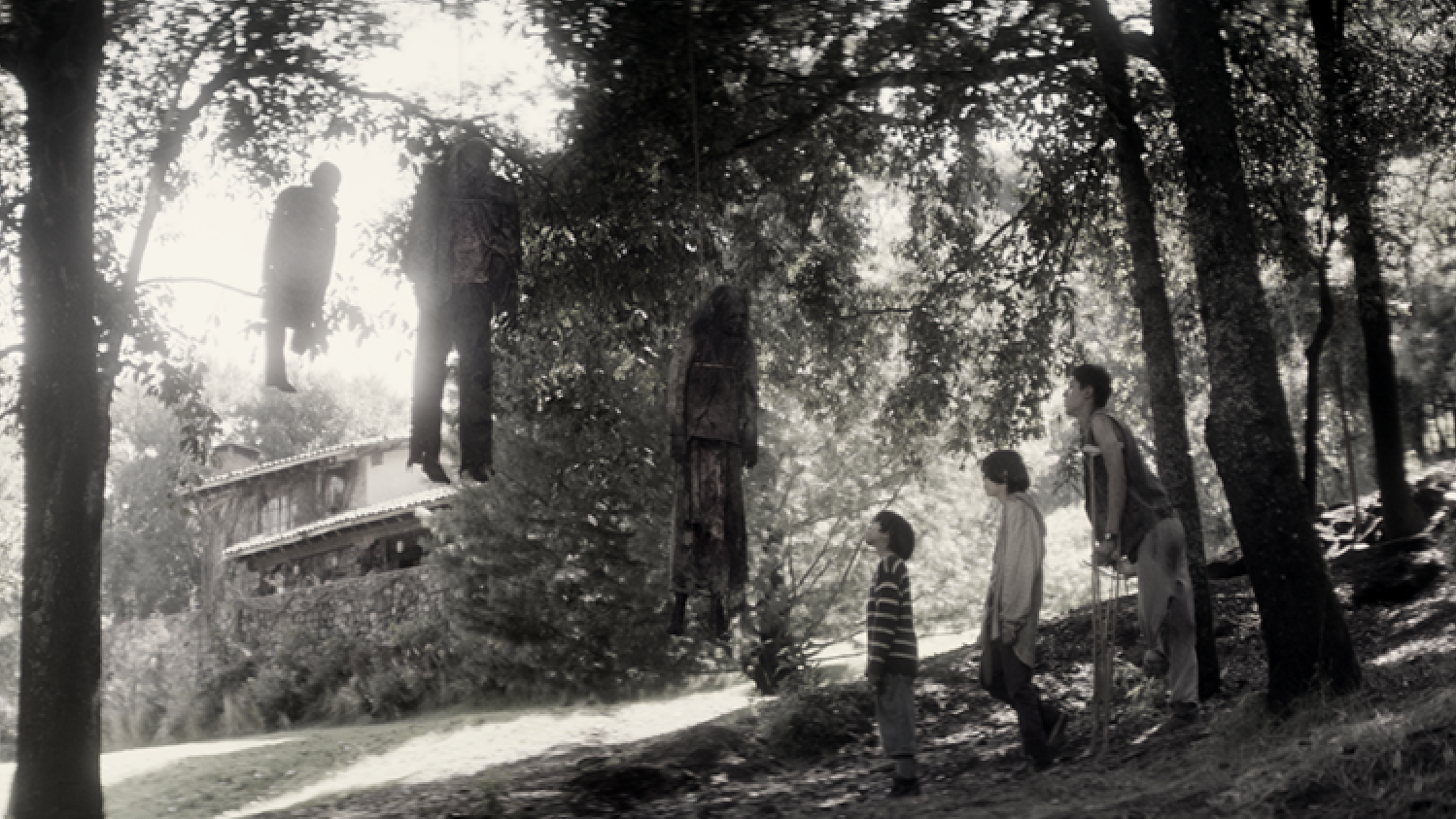
Párvulos explores what coming-of-age really means, especially for young men or anyone familiar with “eldest child syndrome.” Salvador, as the eldest son, has to take on his own internal battles while also experiencing heart-breaking role reversal. He has to grapple with the strain that an authoritative role places on a once brotherly relationship. Ironically, this includes forcing certain ideas of masculinity onto Oliver, while also denying Benjamin any chances of maturing. Oliver, as a middle child, is being forced to grow beyond boyhood quickly, just as Salvador did–yet, there is a desire to preserve Benjamin’s hope for their future by shielding him from reality. The son becomes the father, and the parents become the children. There is an expectation in many cultures that children will repay their elders by caring for them near the end of their lives, but their commitment to this idea and their inability to leave for prospects of a better future is ultimately destructive.
These themes of masculinity, the salience of family bonds, and the loss of innocence when that family unit is hit with hardship are heavy hitters and help set Ezban’s film apart from the typical coming-of-age horror–but as the film continues, and as it reflects the ways we still struggle with the effects of COVID-19, its messaging gets muddled. Starting as a strong, gut-punching, and fun film, it begins to get lost on its way towards a conclusion. Sexual frustrations, religious zealots, and unsettlingly anti-vaxx rhetoric all seem to serve as more ways to try and incorporate zombie apocalypse staples without really serving our main trio’s development. While my own experience could be soured by my uniquely American perspective on the mishandling of the pandemic, these ideas became blemishes on my enjoyment of the film.
Overall, Párvulos is a fun installment into the zombie horror lexicon that delivers on the blood and terror as well as the deep dive into the human experience that is expected. Despite a final act that overstays its welcome, it is a promising film for fans looking to expand their horizons when it comes to talented Mexican filmmakers like Isaac Ezban.
 Siren Death Cult