“The past doesn’t just go away.”
Almost a couple years ago now, I finished my Master’s thesis diving into the evolution of the rape-revenge narrative within horror cinema. Despite the sensitivity around the subject of sexual assault, or perhaps as a direct result to the difficulty around discussing this topic, I am passionate about the existence of these types of films. Life is traumatizing and cinema needs to reflect this. As my research came to a close and I spent years of my life digging into the history of films like The Last House on the Left and I Spit on Your Grave, I began to ponder what the future of rape-revenge looked like. My final chapter centered on women behind the camera that were finally given the power to tell their own stories and the revolutionary potential this created. Because of the link I found between major historical events, the evolution of public sentiments and understandings of sexual assault, and the subsequent response from filmmakers, I questioned when the next wave of rape-revenge films might make an appearance. Little did I know that Jamie Alvey had been working on her own script and her story would soon hit our screens. Directed by Mary Beth McAndrews, Dread Central’s fearless editor-in-chief, Bystanders certainly brings a fresh perspective to the rape-revenge genre. The premise is par for the course when it comes to what audiences expect from this genre: Abby and her friends are drugged and assaulted by boys at a party, then left in the woods while the boys hunt them for sport. The night quickly gets out of hand, however, when these predatory boys come across a couple who is more than they bargained for.
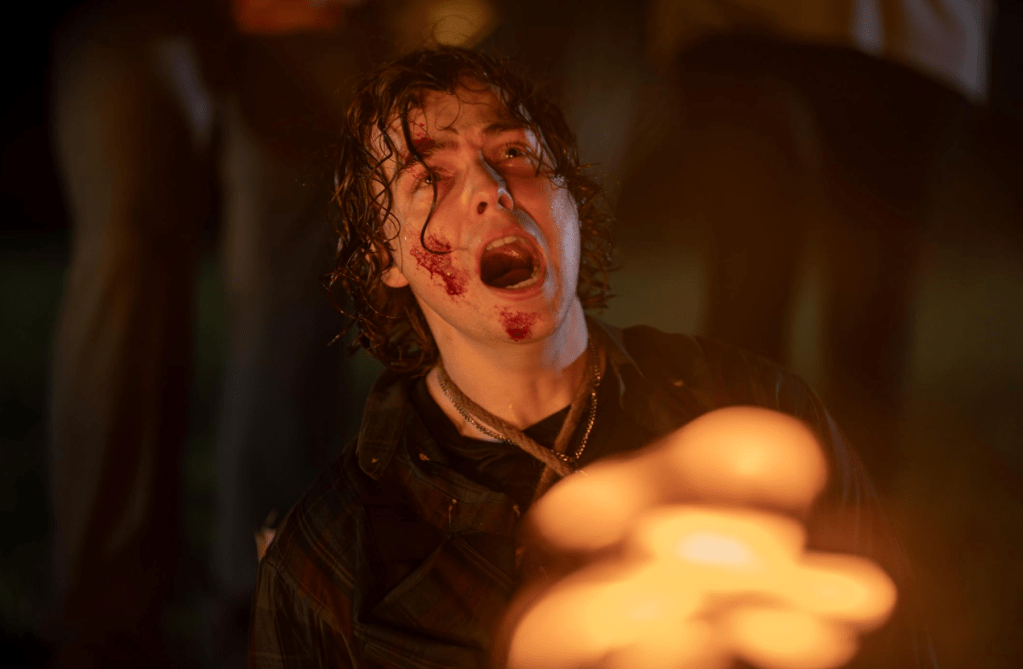
The film opens in a thrilling chase. A bloodied and beaten girl runs through the woods and men can be heard hooting and hollering in the background, setting a scene that could turn your stomach. She finally reaches the road where a car pulls over to answer her calls for help. Cut to eighteen hours earlier, we meet Clare (Jamie Alvey) and Gray (Garrett Murphy), a couple who are reluctantly readying themselves for Clare’s sister’s wedding. Our time with them is brief as another cut introduces us to Abby (Brandi Botkin) and her girl group as they ready themselves for a night out. Their plan for the night is a party at a house in the woods–where a rancid cocktail is being concocted in the bathtub and other disgusting frat boy shenanigans ensue.
The party ends up not being the rager the girls expected. In fact, there is nothing that could prepare them for the night ahead. Cody and his entourage slip something into the fluorescent blue drinks (the results of the dreaded tub elixir) as they discuss who they plan to make their moves on. Vulgar and disrespectful behind her back, Cody is able to quickly turn on the charm–a facade that allows Abby to let down her defenses. A sudden haze fades to back and when she slowly gains consciousness, all that can be heard is a sickening discussion of the “fun” the boys had with Abby and her friends. The girls are left defenseless in the woods, prey for what the boys dub a “whore hunt.” As Clare and Gray venture back home from the wedding, their paths cross with Abby and the film finally circles back to the opening scene of terror. Cody and his crew’s bravado quickly deflates when this unassuming couple flips the script and the hunters now become the hunted.
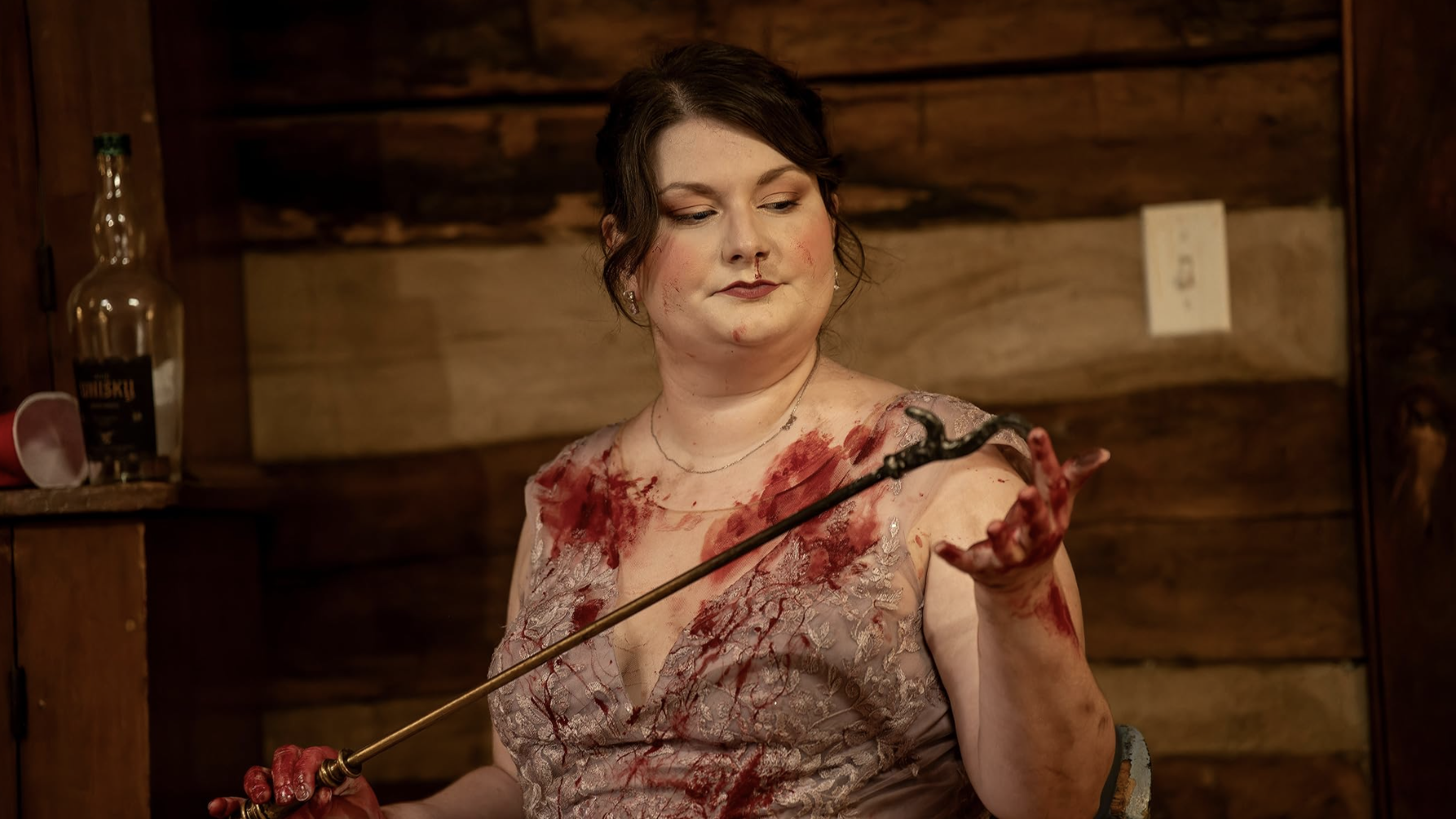
The topic of ‘bystander intervention,” something that does not happen enough, is played to the extreme as Clare and Gray unleash a blood bath on these dirt bags. The mood of the film is unexpectedly light, and the tension quickly dies once the film shows its hand and the pursuit turns into more of a walk in the park. However, despite a previously nonchalant nature, Clare’s rage comes out when she finally slices into some boys. Her weapon of choice is a knife, something that makes her murders personal. The phallic symbol she wields gives the predators she hunts a taste of their own medicine. Interestingly, Abby does not seem moved by the violence or even present for a majority of the film. She remains in a blank state of shock, perhaps not even aware that she needs to process what just happened to her. As described in Rape-Revenge: A Critical Study by Alexandra Heller-Nicholas, these films can usually be categorized by a “male hero” who avenges the victim of the film, or a “female victim-hero” who takes matter into her own hands. But when Abby becomes a sort of sidekick to Clare and Gray, Bystanders defies this binary that previously defined the genre. Although a pair of heroes swoop in to take care of Abby, Clare is the dominating force–especially as a survivor herself. Not to mention, while her participation in the violence is initially barred by the couple who recognize the moral gray area in fighting violence with violence, Abby does eventually unleash the anger that has been building within her throughout the night. This is when Botkin’s performance becomes electric and the film finally reaches some catharsis.
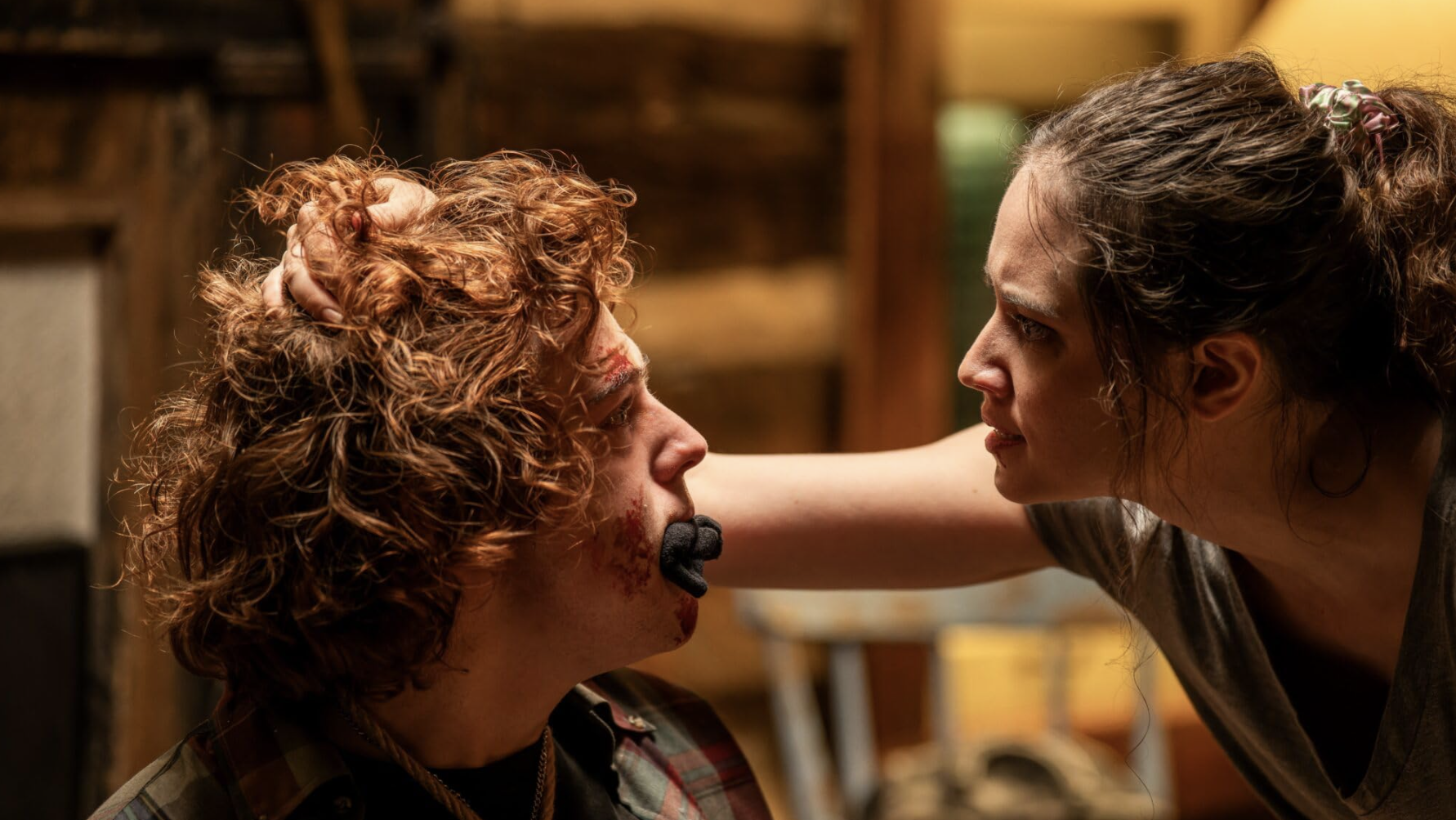
The traumas we experience cause life to become messy, and so a film that grapples with those dark feelings will inevitably embody some of that messiness. The first act of the film, because of its quick jumps between three sets of characters, can feel disjointed and jarring. We never truly get to know any of the characters at play, trimming all the excess at the front end of the film to make way for a prolonged quest for retribution. While many fans might appreciate getting straight to the point, it ultimately feels like the film is missing some pieces.
Nonetheless, McAndrew’s directorial debut is a feat that deserves celebration. It is clear that she understands the nuance that exists in revenge fantasies and possesses a caring eye that many films of the past certainly lacked. Without a doubt, Bystanders is evidence of the future possible when survivors tell their own stories.
 Siren Death Cult