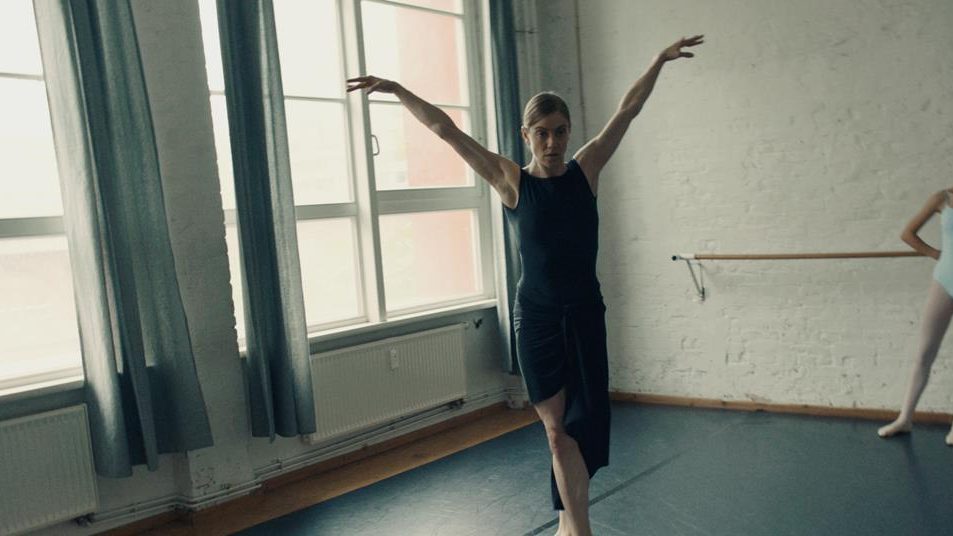

Directed by Isabelle Stever, GRAND JETE follows a ballet instructor, Nadja (Sarah Grether), who decides to rekindle her relationship with her now teenage son, Mario (Emil von Schönfels) who has been living with her mother. It becomes clear what and who was left behind in the wake of Nadja’s former career as a prima ballerina–and she is now desperate to recreate that connection, not just with motherhood but with herself. When two wandering souls find themselves lost in one another, Nadja and Mario’s relationship journey’s beyond taboo.
“You’re in the air for a second. Nothing is behind you or in front of you. That’s your grand jeté.”
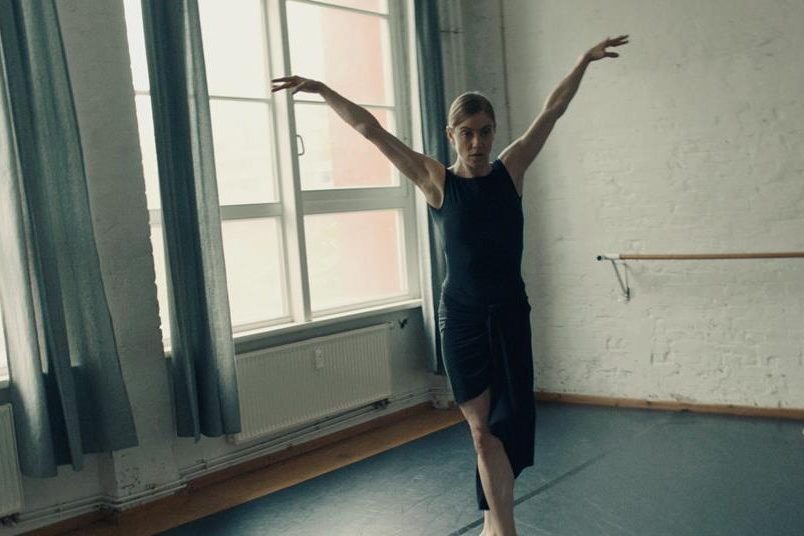
Dancers know a grand jeté to be a regular part of our grand allegro combinations, a leap from one foot to the other resulting in a ‘split’ pose while suspended in the air. This is the space where the characters find themselves–having taken a leap, but unable to find their balance or a place to land.
Once Nadja initiates a reconnection with her son, the tension is thick enough to suffocate any viewer who dares to take a peek. This feeling is amplified by the cramped 3:2 aspect ratio and a camera that often leaves much out of focus or out of frame, reflecting the tunnel vision that our characters experience. When watching GRAND JETE, one feels like they’re another character in the room and three is definitely a crowd for the tiny flats, dimly lit bathrooms, and old bed frames that Nadja and Mario spend much of the film inhabiting.
Like their relationship, the camerawork creates scenes that are unclear and viewers might be unsure what they are looking at or what might be happening just off the edges of the screen. The two have spent so much time physically and emotionally disconnected from one another and once they become close, their initial disconnect causes them to be unable to stop themselves from becoming too close. As a result, they are unsure what they are looking at when they are in the presence of one another. They have been stripped of the meaning they should hold, as ‘mother’ or ‘son’, and instead see each other as people, see someone they know they (should) love and see someone who yearns for a connection. Once they begin to try to fill those voids in one another, it becomes a journey of ‘self’ through confrontation with the ‘other’ but they journey too deep and their relationship quickly becomes incestuous.

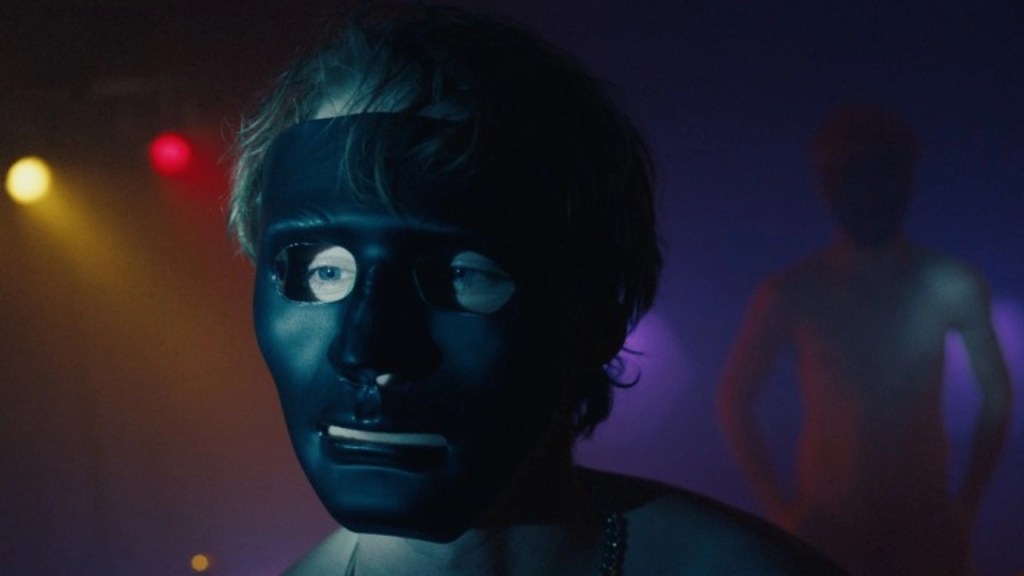
One of the most interesting aspects of the film is the choice to give Nadja a career in ballet–a subject dear to my heart. As a lifelong dancer myself, I can safely declare ballet to be body horror and the use of ballet as a narrative and visual tool often conjures themes of repression and issues of identity. This is woven throughout the film, not just in Nadja’s ballet studio, but throughout various club scenes where Nadja and Mario use dancing as a form of expression that mediates or acts as a surrogate for intimate interaction. During one of the club scenes, Mario takes Nadja along to one of his competitions in which groups of men engage in a feat of endurance by holding weights with their genitalia. The moderator explains that “this requires not only talent, but years of training,” not unlike Nadja’s career as a dancer–the career that separated her and Mario. The two find themselves engrossed in activities that are also parallel in that they not only require talent and training but a level of masochism.
Similar to their relationship with one another, they exhibit a simultaneous over-connection yet disconnection from their own bodies. One of the many reasons ballet is body horror is that a dancer, as well as other types of athletes, will experience their body in unique ways–having felt sore in muscles that many do not know even exist, duct taping and wrapping your feet in ways that only work for you, having every joint pop when you move and knowing too well how easily your toenails can pop off… the exploration of inhabiting a physical form cannot be understated. But one can also become disassociated from that same form once the body becomes an instrument used not only for artistic self-expression but for your career or as a measure of success. This disconnect from the physical self is displayed through shots that linger on a torso or other fragmented parts of the body and the reconnection happens narratively as Nadja and Mario learn more about themselves through the forbidden exploration of each other’s bodies, making GRAND JETE a Freudian masterclass.
Few subjects are more sensitive than incest, but this German drama is less than erotic, tackling a transgressive topic with grace. Simultaneously a coming-of-age tale while also a return to the womb, GRAND JETE is a story of loneliness, crossing boundaries, and self-exploration. Once one leaps too far, you can become unsure where you’re supposed to land and the fall could be too hard too quick. This is Nadja and Mario’s grand jeté.
Stream for free on Tubi or pick up the gorgeous Altered Innocence Blu-ray release like I did!
 Siren Death Cult